53 espèces
d'oiseaux migrateurs
En 2021, l'Observatoire passe à un niveau supérieur d'observation. Vous trouverez non plus 12 espèces à observer, mais 53 espèces d'oiseaux migrateurs réparties en quatre groupes.
Oiseaux de passage
Alouette des champs, bécasse des bois, caille des blés, étourneau sansonnet, grive draine, grive litorne, grive mauvis, grive musicienne, merle noir, pigeon biset, pigeon colombin, pigeon ramier, tourterelle des bois, tourterelle turque.
Oies · Canards · Rallidés
Bernache du Canada, canard chipeau, canard colvert, canard pilet, canard siffleur, canard souchet, eider à duvet, foulque macroule, fuligule milouin, fuligule milouinan, garrot à œil d'or, harelde de Miquelon, macreuse brune, macreuse noire, nette rousse, oie cendrée, oie des moissons, oie rieuse, poule d'eau, râle d'eau, sarcelle d'été, sarcelle d'hiver.
Limicoles
Barge rousse, barge à queue noire, bécasseau maubèche, bécassine des marais, bécassine sourde, chevalier aboyeur, chevalier arlequin, chevalier combattant, chevalier gambette, courlis cendré, courlis corlieu, huitrier pie, pluvier argenté, pluvier doré, vanneau huppé.
Phalacrocoracidés
Le cormoran — seul représentant de la famille des Phalacrocoracidae, classé dans la liste des limicoles pour la saisie.
Deux périodes d'observation
sur l'année complète
Migration & Hivernage
Notez le nombre total d'oiseaux observés de chaque espèce en séparant les oiseaux en vol de ceux au sol.
Oiseaux en vol (non induit par l'observateur) — noter la direction :
· N-NO : Nord-Nord/Ouest · N-NE : Nord-Nord/Est
· S-SE : Sud-Sud/Est · S-SO : Sud-Sud/Ouest
Oiseaux non en vol — nombre au sol ou dans la végétation.
Reproduction
Notez le nombre total d'oiseaux observés de chaque espèce en précisant la présence de jeunes.
TOTAL — Nombre total d'oiseaux observés.
Si présence de jeunes :
· NVO : Nombre de jeunes non volants
· VO : Nombre de jeunes volants
Sur vos territoires et circuits d'observation habituels, remplissez quand même une fiche si vous n'observez pas ou peu d'oiseaux. Ces informations sont tout aussi importantes pour la validité scientifique des données.
Comment rentrer
vos observations ?
Créez votre compte
Cliquez sur Saisir une Observation puis sur le inscription. L'inscription ne se fait qu'une seule fois. Le pseudo et le mot de passe choisis vous permettront de saisir toutes vos observations.
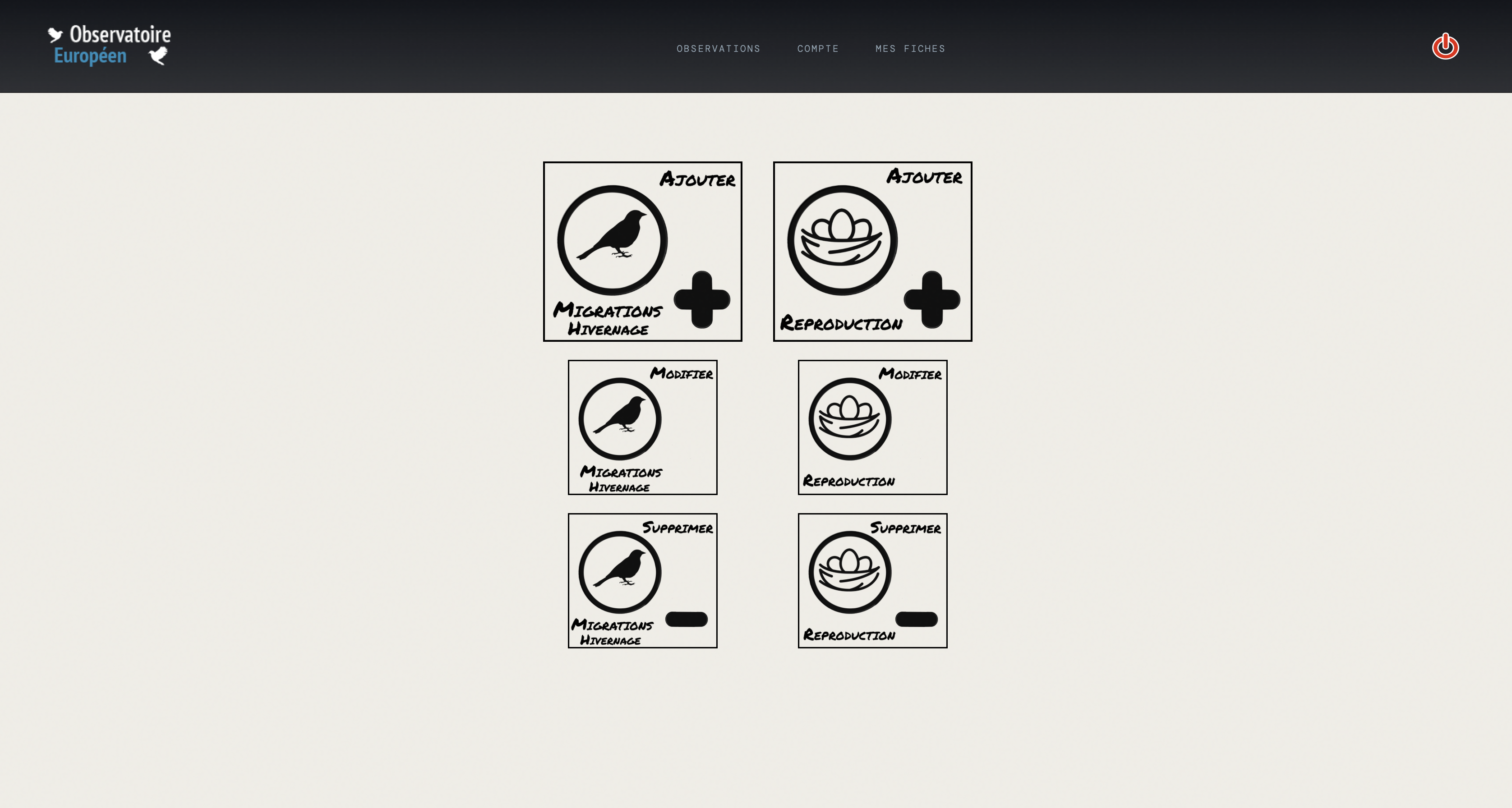
Choisissez la période
Sélectionnez Migration-Hivernage ou Reproduction en cliquant sur l'une des deux photos.
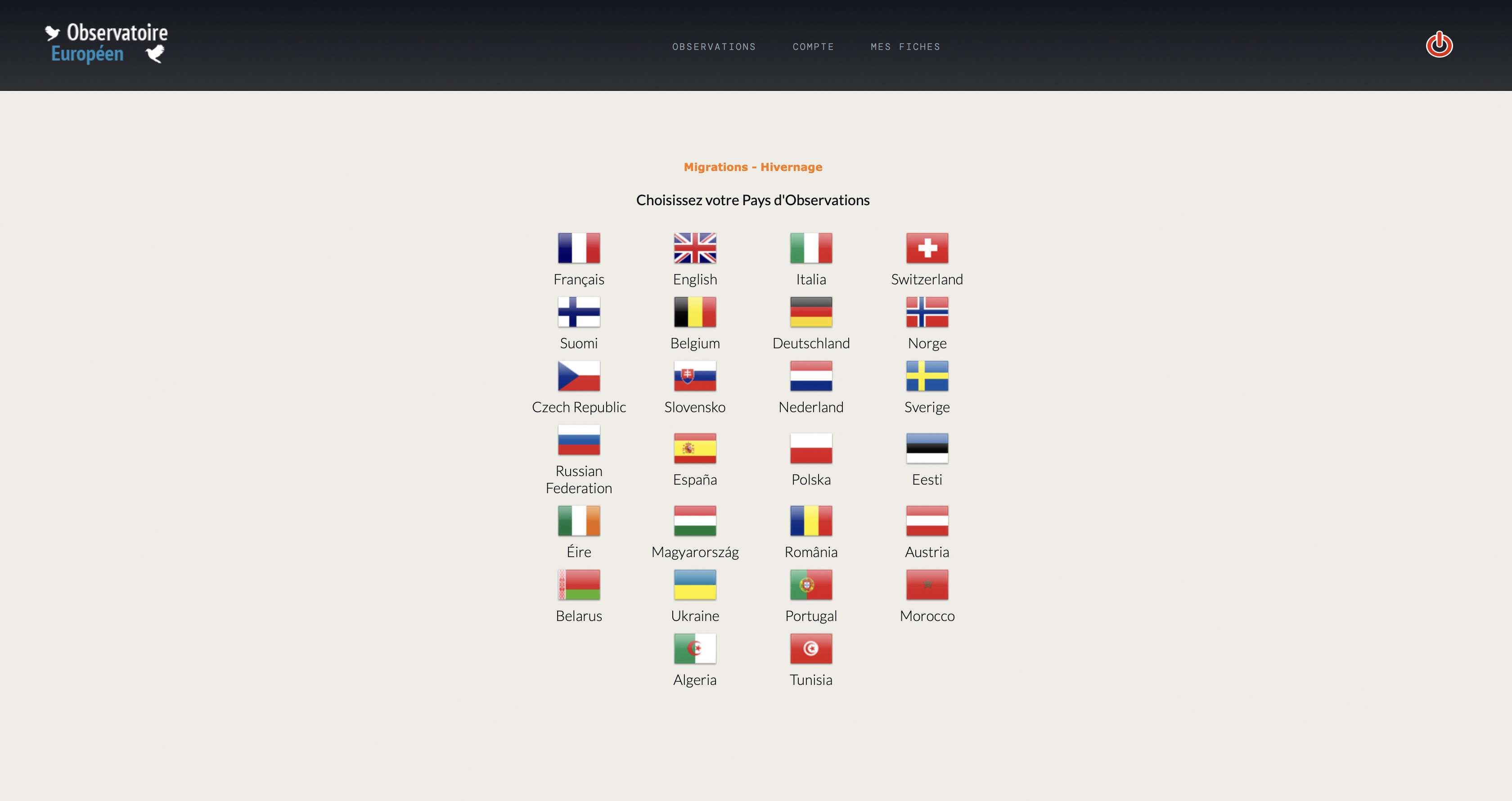
Sélectionnez le pays
Choisissez le pays où vous avez réalisé vos observations en cliquant sur le drapeau correspondant.
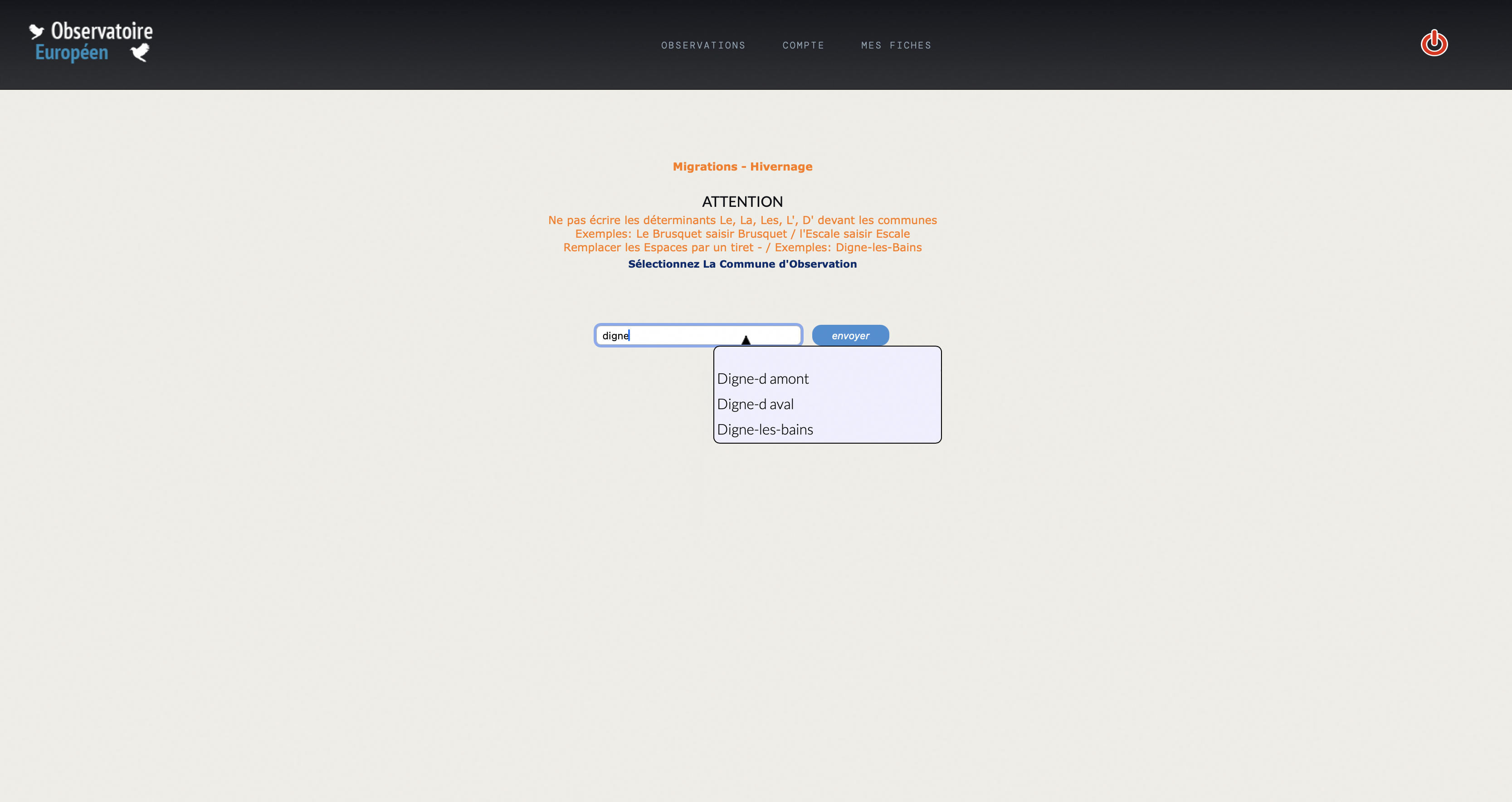
Entrez la commune
Commencez à écrire le nom de la commune d'observation. Lorsqu'elle apparaît dans le menu déroulant, sélectionnez-la puis cliquez sur Envoyer.
Remplissez la fiche de terrain
Vous arrivez sur la fiche de terrain — remplissez-la et validez. Vous pourrez la modifier via l'onglet « Modifier fiches ». Il n'est plus utile de mettre des 0 dans toutes les cases.
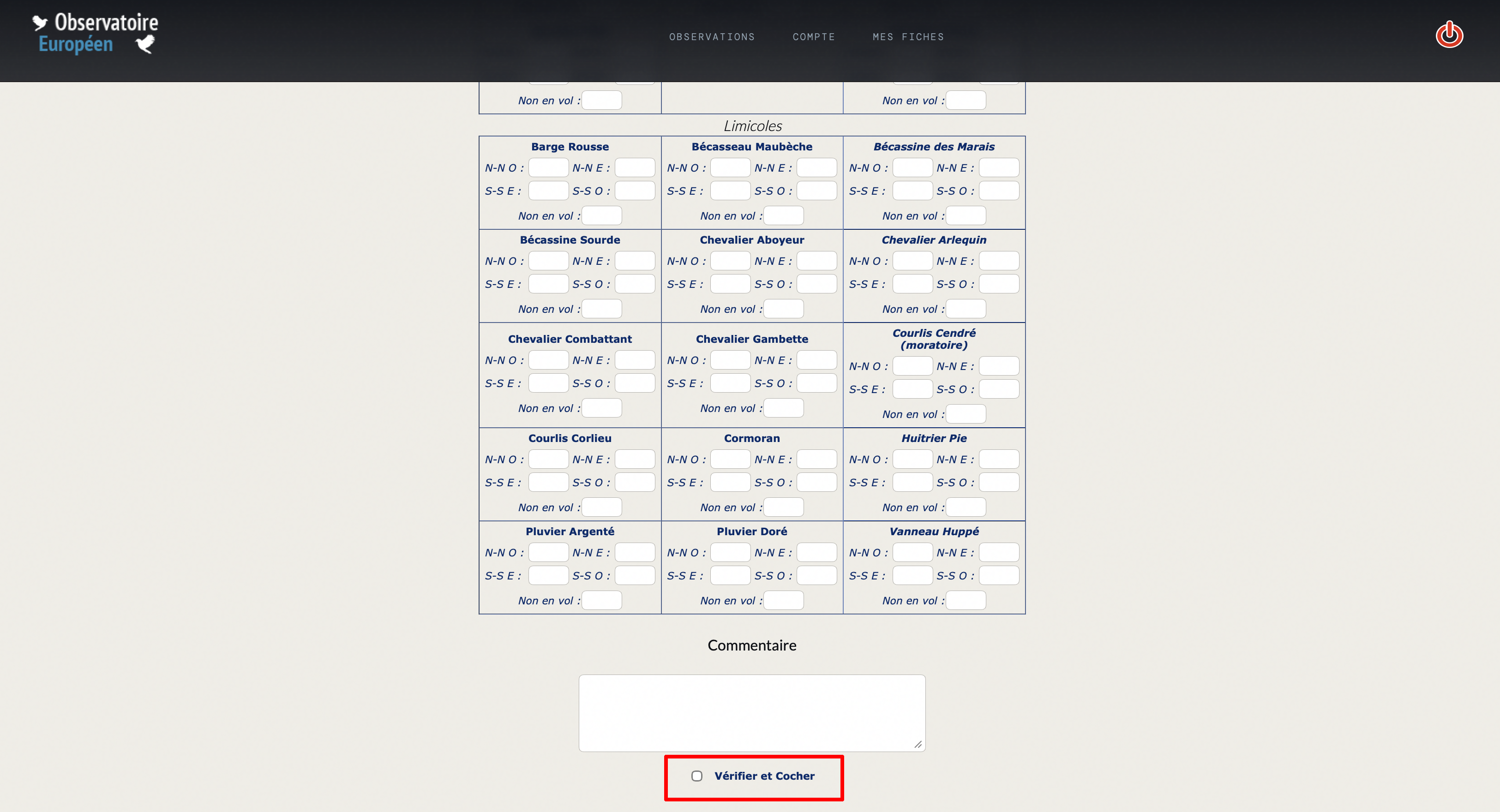
Cochez la case avant de cliquer sur Envoyer.
Les fiches de terrain papier sont téléchargeables en bas de cette page. Vous avez le choix entre la fiche Migration-Hivernage et la fiche Reproduction.
Informations personnelles
Sur la première fiche, indiquez votre nom, adresse, département et numéro de permis de chasse. Il n'est pas nécessaire de les répéter sur les fiches suivantes.
Localisation de la sortie
À chaque sortie, notez : la commune d'observation, le mode de chasse, si vous avez un GPS (latitude-longitude) et le type de milieu.
Date et horaires
Notez la date, l'heure de début et de fin — indispensable pour calculer la durée et l'effort d'observation.
Dénombrement des oiseaux
Notez le nombre d'oiseaux observés par espèce au fur et à mesure ou en fin de chasse, en évitant les doubles comptages.
Météo simplifiée
Renseignez les conditions météorologiques simplifiées de la sortie.
Envoi mensuel
Fiches à renvoyer tous les mois. Transmettez-les à votre Fédération de chasseurs, à l'ANDCTG ou à l'IMPCF par courrier, ou scannées par email à observatoire.migrateurs@gmail.com
Télécharger les fiches
au format PDF
Nous contacter
Chez Claude Magnan
1 rue des Écoles
04300 Forcalquier